Navigating the Electric Horizon: A Deep Dive into the EV Landscape of 2026
The automotive industry is undergoing its most profound transformation since the invention of the internal combustion engine. As we move deeper into 2026, the shift toward electric mobility is no longer just a futuristic concept—it is a present-day reality characterized by rapid technological breakthroughs, shifting global markets, and evolving public policy.
Before diving into the complexities of the current market, it is essential to understand the foundational technologies driving this shift. An Electric Vehicle (EV) uses one or more electric motors for propulsion, drawing power from a rechargeable energy storage system. However, not all EVs are built the same:
- Battery Electric Vehicles (BEVs): Fully electric vehicles powered exclusively by a battery pack, producing zero tailpipe emissions.
- Plug-in Hybrid Electric Vehicles (PHEVs): Vehicles that combine an electric motor and a plug-in battery with a traditional internal combustion engine (ICE) for extended range.
- Hybrid Electric Vehicles (HEVs): Vehicles utilizing both an ICE and an electric motor, where the battery is charged solely through regenerative braking and the engine, not by plugging in.
- Fuel Cell Electric Vehicles (FCEVs): Innovative vehicles that use hydrogen gas to power an electric motor, emitting only water vapor.
Dynamic Market & Sales Trends (2025–2026)
The global EV landscape is currently undergoing a massive regional divergence. We are witnessing explosive growth in international markets juxtaposed against a notable slowdown in the United States.
On a global scale, the EV boom is undeniable. Global EV registrations hit a staggering 20.7 million in 2025, representing a 20% year-over-year growth. As we progress through 2026, EVs are projected to capture over 27% of the global light-vehicle market share. China remains the undisputed global engine for this adoption, accounting for 63% of all global BEV sales. Automaker BYD continues to hold the #1 spot globally for BEV sales, driven by massive vertical integration and a highly appealing lineup of affordable models.
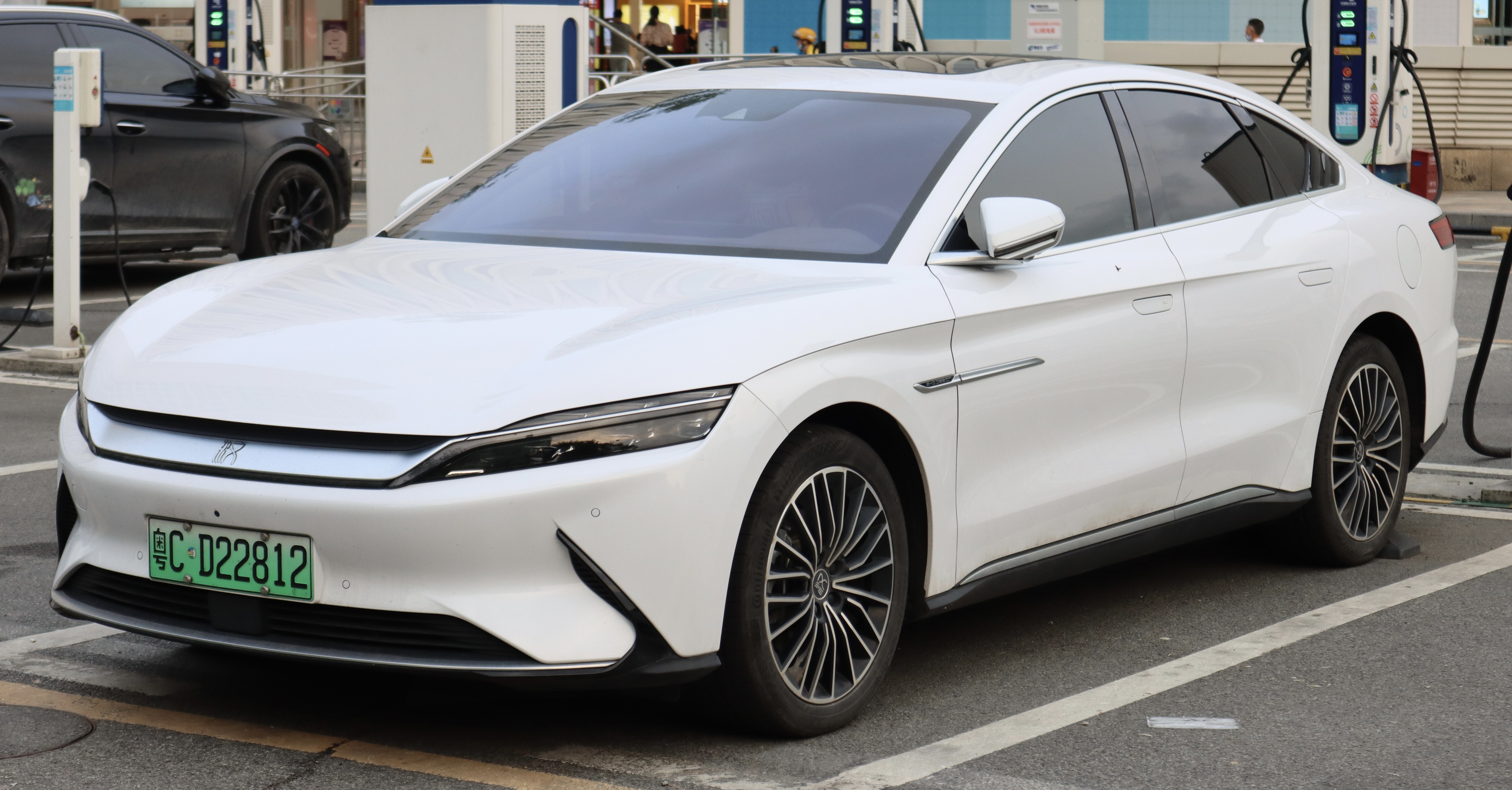
Chinese automakers like BYD are dominating the global market through vertical integration and affordable pricing.
In stark contrast, the U.S. market has experienced a significant cooling period. U.S. EV sales growth was essentially flat (around 1%) in 2025. While EVs accounted for 7.4% of all new U.S. vehicle registrations in 2025, that figure dropped to 6.5% by February 2026. Tesla, historically the vanguard of American EVs, remains a dominant force, but its U.S. and global market shares have declined. This is largely due to heightened competition from Chinese automakers and a strategic pivot by Tesla's leadership toward AI and robotics.
Battery Technology Breakthroughs
Range anxiety and battery degradation have long been the primary barriers to EV adoption. However, 2026 is a watershed year as next-generation battery chemistries transition from laboratories to commercial production.
- Sodium-Ion (Na-ion) Batteries: 2026 marks the commercial deployment of sodium-ion batteries in passenger EVs. Manufacturers like CATL are mass-producing their "Naxtra" platforms for 2026 vehicles. These batteries eliminate the need for expensive, hard-to-mine lithium and heavy metals. Achieving energy densities of up to 175 Wh/kg, they comfortably support 500+ km ranges and boast a much safer thermal profile.
- Solid-State Batteries (SSBs): Solid-state technology replaces flammable liquid electrolytes with solid materials (ceramics, polymers, or sulfides), drastically reducing fire risks. Early commercial SSBs are officially entering production this year. Targeting energy densities of 400–500 Wh/kg—nearly double that of current lithium-ion batteries—they promise future EVs with 1,000 km (620 miles) of range and astonishing 5-to-10 minute fast-charging capabilities.
U.S. Policy & Financial Incentives (2026 Updates)
For American consumers, the financial calculus of buying an EV shifted dramatically following political and legislative changes in late 2025.
The popular $7,500 point-of-sale EV tax credit established by the Inflation Reduction Act (IRA) was phased out for vehicles acquired after September 30, 2025. In its place, the "One Big Beautiful Bill Act" (OBBBA) was introduced. The new federal incentive is an annual, above-the-line tax deduction of up to $10,000 for auto loan interest paid on American-made vehicles. Active through 2028, this deduction comes with strict income caps (phasing out above $100k for single filers) and notably excludes vehicles assembled in Canada or Mexico.
For infrastructure, the 30C federal tax credit for installing alternative fuel vehicle refueling property (home EV chargers) remains active until June 30, 2026. With federal purchase credits gone, buyers are heavily relying on state incentives. Programs like Connecticut’s CHEAPR, alongside various local utility rebates, remain crucial in 2026 to help lower upfront EV costs.
Charging Infrastructure & The NACS Era
Perhaps the most celebrated development for North American EV drivers is the end of charging connector fragmentation. The North American Charging Standard (NACS), officially standardized as SAE J3400, is now the dominant charging port.

Tesla's charging technology has now become the standard across North America, vastly improving public charging accessibility.
As of 2025 and 2026, major automakers—including Ford, GM, Hyundai, Kia, and Rivian—are rolling out new EVs with native NACS inlets built directly into the vehicles, eliminating the cumbersome need for adapters. Tesla's Supercharger network, which makes up roughly three out of four fast chargers in North America, is now widely accessible to non-Tesla EVs. Third-party network operators are also aggressively retrofitting their stations; EVgo, for example, is deploying over 500 NACS fast-charging connectors by the end of 2026.
Understanding charging speeds remains vital for new owners:
- Level 1: 120V standard outlet (adds ~3-5 miles of range per hour).
- Level 2: 240V dedicated circuit (adds ~15-30 miles of range per hour; ideal for overnight home charging).
- DC Fast Charging (Level 3): 400V to 800V systems capable of charging a battery from 10% to 80% in just 15–30 minutes.
Economic & Environmental Impact
Despite recent market fluctuations in the U.S., the economic argument for EVs remains exceptionally strong. Electric vehicles generally offer a significantly lower Total Cost of Ownership (TCO) over their lifespan compared to gas-powered cars. They require no oil changes, possess far fewer moving parts, and utilize regenerative braking, which vastly extends the life of brake pads.

Global EV adoption continues to rise as the Total Cost of Ownership becomes increasingly favorable compared to traditional ICE vehicles.
Furthermore, manufacturing costs are continuing to plummet. By 2024, lithium-ion battery pack prices dropped to roughly $108 per kilowatt-hour, a trend that has persistently driven down the manufacturing cost of EVs into 2026.
Environmentally, the lifecycle emissions of EVs represent a massive improvement over traditional vehicles. Even when factoring in the carbon footprint of battery mining and manufacturing, EVs produce significantly lower greenhouse gas emissions over their total lifespan than ICE vehicles. This environmental benefit only compounds as global electrical grids increasingly transition away from fossil fuels toward renewable energy sources like wind and solar.
As we look toward the end of the decade, the EV industry of 2026 proves that while the road to electrification may have regional speed bumps, the global trajectory is unequivocally electric.